The Greenwood District Story
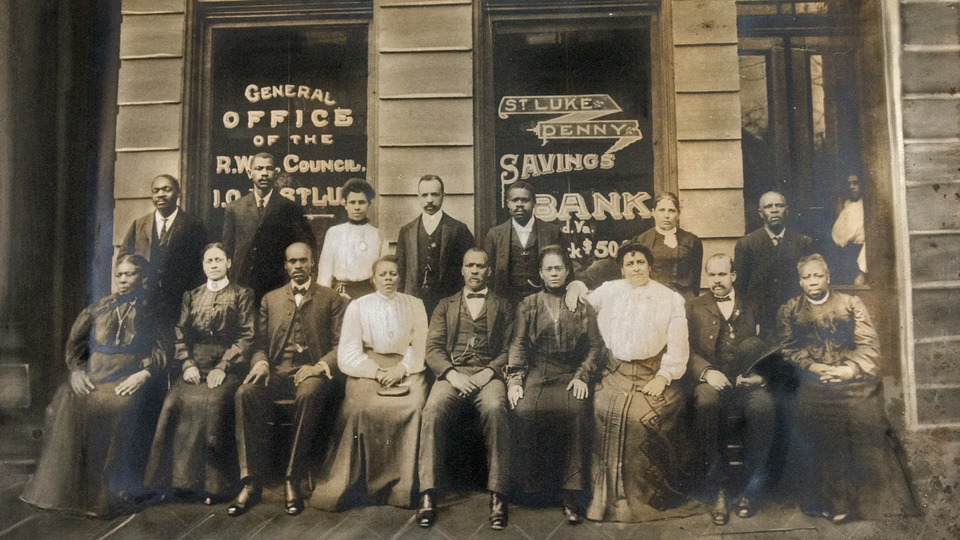
In the early 1900s, the Greenwood District in Tulsa, Oklahoma emerged as one of the most economically successful Black communities in the United States. Established during an era of segregation, Greenwood grew into a self-sustaining commercial and residential center, earning national recognition as “Black Wall Street.”
Greenwood was home to a robust ecosystem of Black-owned enterprises, including financial institutions, hotels, newspapers, medical practices, entertainment venues, and retail businesses. These organizations supported a thriving community grounded in entrepreneurship, collaboration, and shared purpose. Greenwood stood as a powerful expression of ownership, self-determination, and collective progress.
However, in May 1921 Greenwood was devastated by a period of racially-motivated adversity that resulted in widespread loss of homes, businesses, and economic infrastructure. The impact interrupted growth, constrained continuity, and significantly altered the trajectory of generational advancement.
Yet Greenwood’s defining story is not one of loss..it is one of resolve. In the aftermath, residents began rebuilding with determination to preserve and restore a shared vision for the future. While Greenwood was never fully returned to its original scale, its influence endured – shaped by resilience, ambition, and an unwavering belief in progress.
Today, the Greenwood District still stands as a lasting symbol of what is possible when communities invest in themselves and build together. It is remembered not only for what it overcame, but for what it achieved, the values it embodied, and the inspiration it continues to provide for future generations.